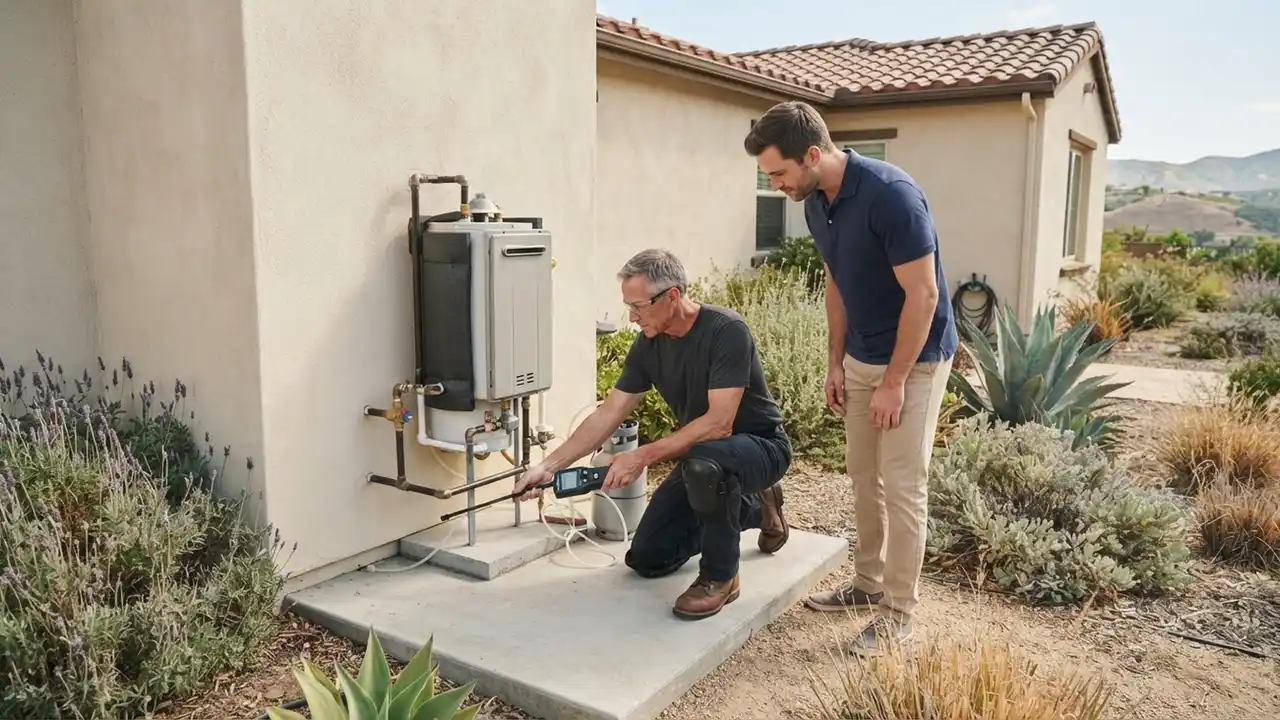
How Underground Leak Detection Protects Temecula Properties: Essential Guide
Underground leaks in Temecula can quietly destroy soil, slabs, and foundations. Here's how detection works, what it costs, and when to call a pro.

Underground leak detection protects Temecula properties by finding water that is escaping from buried pipes, irrigation lines, or under your slab before it damages soil, foundations, and landscaping. It works by pressurizing the system, then using acoustic listening, thermal imaging, and tracer gas to pinpoint the exact break without tearing up your yard. Underground leak detection is the diagnostic service that locates hidden water loss so repairs can be targeted instead of guessed at.
If you have noticed a spiking water bill, a warm spot on the floor, or a patch of grass that stays green when everything else is brown, you already have the symptoms. This guide covers why these leaks happen so often in Temecula, what the warning signs look like, what detection and repair cost in 2026, and when it is time to stop guessing and call someone.
What Underground Leak Detection Actually Does
Underground leak detection finds the precise location of a water leak beneath the surface of your property. It does not fix the leak. It answers one question: where exactly is the water coming from?
That distinction matters because the repair method depends entirely on the location. A leak in an irrigation lateral three feet from the valve box is a 45-minute job. A leak under a post-tension slab in a Redhawk home is a different project altogether. Guessing wrong means digging in the wrong place, and in Temecula's clay-heavy soil, that is expensive.
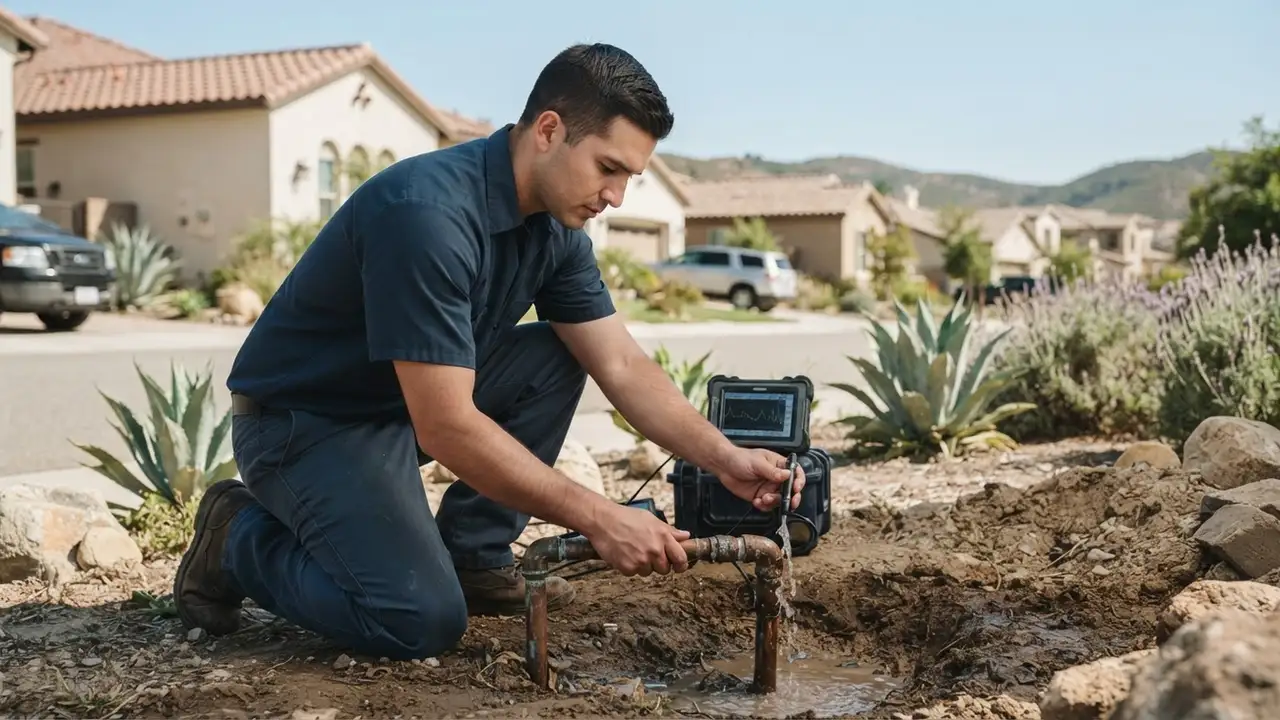
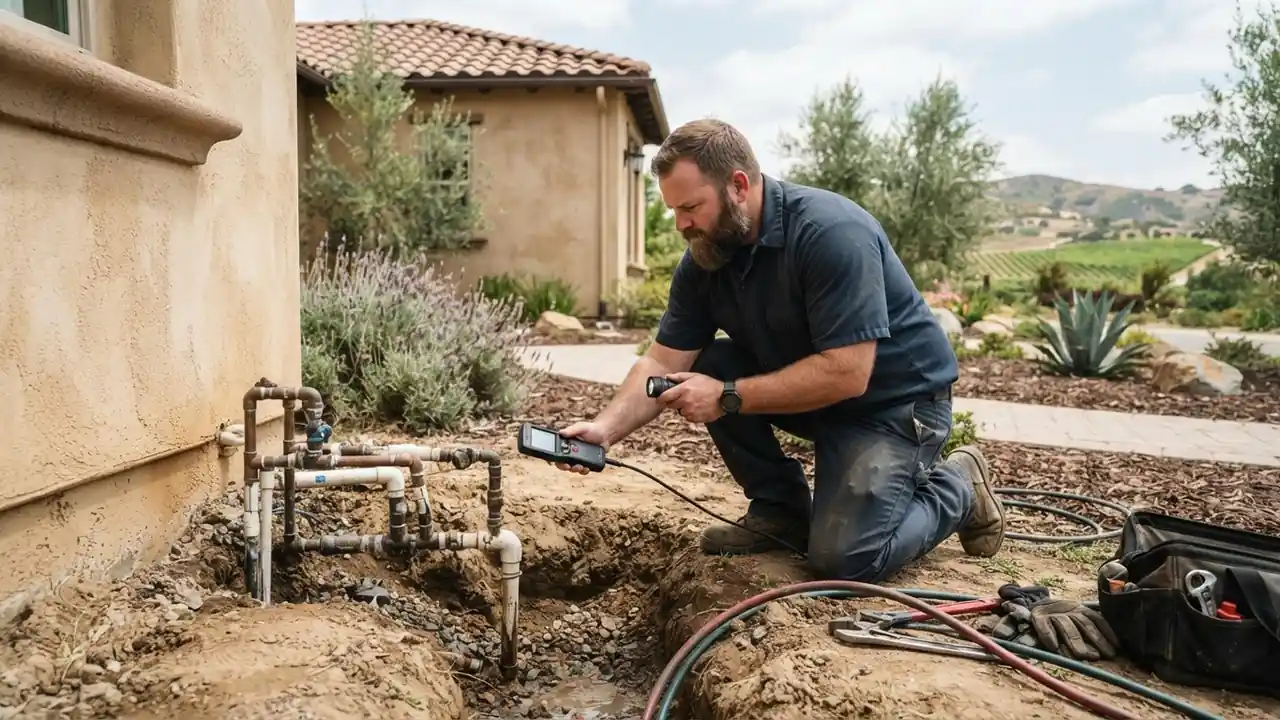
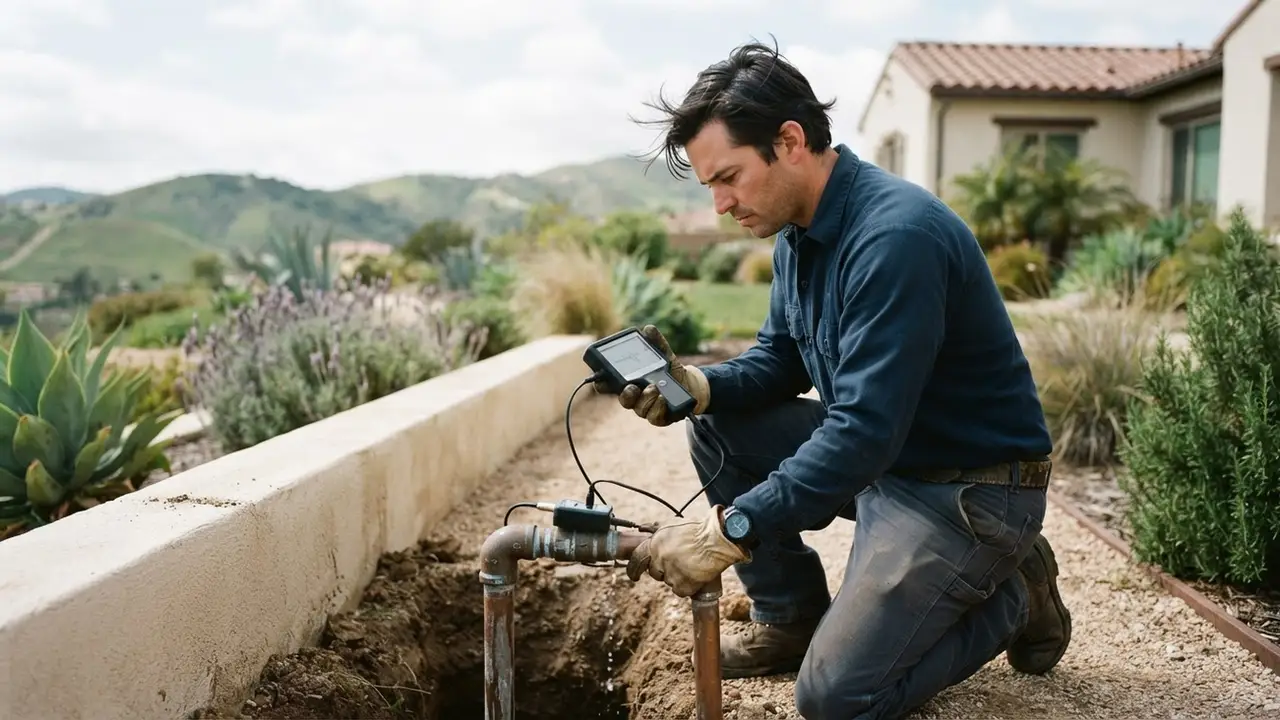
Our technicians use four tools in combination:
- Acoustic listening: sensitive microphones placed on the ground or on a pipe surface pick up the hiss or thump of pressurized water escaping.
- Thermal imaging: infrared cameras show temperature differences where warm supply water is soaking cool soil.
- Tracer gas: a hydrogen-nitrogen mix is pushed into the line, then a detector sniffs the surface to find where it escapes.
- Pressure isolation: we isolate sections of the system to confirm which line is losing water and how fast.
Most residential detections take 60 to 120 minutes. We mark the spot on the ground with paint or flags so you can see exactly where the problem is before anyone picks up a shovel.
Why Underground Leaks Are So Common in Temecula
Temecula sits on expansive clay soils that swell when wet and shrink when dry. That cycle repeats every year, and it puts constant stress on buried pipes.
Summer temperatures here regularly hit 95 to 105 degrees. The top 12 to 18 inches of soil can dry out completely between irrigation cycles, then rehydrate fast when the system runs. Copper supply lines, PVC irrigation mains, and older galvanized pipes all flex under that movement. Joints fail first.
Water chemistry matters too. Temecula's municipal supply runs hard, typically in the 12 to 18 grains-per-gallon range. Hard water deposits scale inside copper and galvanized pipe, thinning the walls over 20 to 30 years until pinhole leaks form.
We see the pattern repeat across neighborhoods. In Leak Detection in Redhawk, the 1990s-era copper supply lines under front yards are now at the age where pinhole failures are routine. Over in Leak Detection in Harveston, the newer builds have fewer pipe-age issues but more irrigation lateral breaks because of landscape settling around the lake and park corridors.
If you want the full picture of how we approach this across the city, our Leak Detection Temecula CA service page covers the equipment and process in more detail.
What Are the Signs of an Underground Leak in Temecula, CA?
The signs of an underground leak in Temecula, CA, are a water bill that jumps 20% or more with no change in usage, wet or spongy patches in the yard, a warm spot on a slab floor, the sound of running water when everything is off, and cracks appearing in driveways or patio slabs.
Here is what to watch for, ranked by how often we see each one:
- Water bill spike. A family of four in Temecula typically uses 8 to 12 CCF per month. If you jump from 10 to 16 CCF with no new landscaping or pool fill, you are losing water somewhere.
- Meter test. Turn off every fixture and appliance, then watch the low-flow indicator on your meter. If it spins, water is moving. That is a confirmed leak.
- Warm or hot spots on the floor. This points to a hot-water line under the slab. It is the most urgent sign because hot water degrades the slab faster.
- Unexplained green patches. A strip of lawn that stays lush while the rest dries out is a classic irrigation or supply-line leak marker.
- Soil settlement or sinkholes. A depression forming in the yard or next to the driveway means soil is being washed away underground.
- Musty smell or elevated humidity indoors. Water wicking up through a slab shows up as a damp smell in closets or along baseboards.
- Cracks in hardscape. New cracks in a driveway, walkway, or patio that were not there last year often trace back to soil movement from a leak.
Two or more of these together is your signal to stop waiting. Underground leaks do not seal themselves, and the damage compounds weekly.
How Underground Leak Detection Protects Your Property
Detection protects your property by stopping the water loss before it undermines the structure, the landscape, and your foundation. The earlier you find it, the smaller the repair.
Here is what is actually at stake when a leak runs untreated for months:
- Foundation damage. Saturated clay expands, then shrinks as it dries. That movement cracks slabs and foundation walls. Foundation repair in this area runs $8,000 to $25,000 depending on severity. A detection and pipe repair is a fraction of that.
- Soil erosion and sinkholes. Water washing under a driveway or patio creates voids. We have seen driveways drop 2 to 3 inches after a slow leak ran for a full season.
- Mold and indoor air quality. Water wicking up through a slab keeps interior humidity above 60%, which is the threshold where mold colonizes drywall and carpet.
- Landscape loss. A leak can drown the root zone of mature trees and shrubs. Replacing a 15-year-old tree is not cheap.
- Water waste. A pinhole leak at 1/16 inch wastes roughly 3,000 to 6,000 gallons per month. At Temecula rates, that is $60 to $150 added to every bill.
Detection also protects you from unnecessary excavation. Without it, the fallback is to dig until you find the problem. With it, we mark the spot and open a targeted trench.
For leaks that have already caused interior moisture, we also handle Water Intrusion Detection Temecula CA to trace where water is entering the living space and stop it at the source.
How the Detection Process Works, Step by Step
The detection process runs in four stages: system isolation, acoustic and thermal scanning, confirmation, and marking. Most homes are done in under two hours.
Step 1: System Isolation
We shut off the main and pressurize each zone separately. This tells us whether the leak is on the domestic supply, the irrigation system, the pool fill line, or the fire sprinkler line. If you have a pool, we isolate that loop first because pool auto-fill valves are a common hidden culprit.
Step 2: Acoustic and Thermal Scanning
With the zone pressurized, we walk the property with listening equipment and a thermal camera. We are looking for the strongest signal. On a slab leak, the thermal camera usually shows a warm streak along the pipe path within 10 to 15 minutes.
Step 3: Confirmation
We never mark a spot on one signal alone. We confirm with a second method, usually tracer gas or a second acoustic pass from a different angle. If the signals disagree, we keep working until they match.
Step 4: Marking and Report
We paint or flag the location, note the depth, and give you a written summary of what we found and what the repair will involve. If the leak is on an irrigation line, we can often repair it the same visit. If it is under a slab, we schedule the repair separately so you know the scope before we start cutting.
For slab-specific work, the next step is usually Slab Leak Detection Temecula CA, which uses the same equipment but focuses on the under-slab pipe network and the repair options that avoid breaking up the whole floor.
What Underground Leak Repair in Temecula Costs in 2026
Typical 2026 pricing in the Temecula area runs $350 to $700 for detection alone, and $1,200 to $4,500 for the repair depending on location and pipe type.
Here is the breakdown we give homeowners before we start:
- Detection only: $350 to $700. Includes full system scan, confirmation, and marking.
- Irrigation lateral repair: $250 to $600. Usually a single trench, one or two fittings, and a pressure test.
- Main supply line repair in the yard: $800 to $2,200. Depends on depth and whether we replace a section or the whole run.
- Slab leak repair (spot repair): $1,500 to $3,500. Involves opening the slab at the marked location, repairing the pipe, and patching concrete.
- Slab leak repair (reroute): $2,500 to $4,500. We abandon the failed line under the slab and reroute through the attic or walls. No concrete cutting.
- Full main line replacement: $4,000 to $8,000. Only when the pipe is failing in multiple places.
Two things drive the price up: depth and hardscape. A leak under a stamped concrete patio costs more to access than one under bare soil. We tell you which category you are in before we quote.
One more note on timing. If you catch the leak in fall or winter, you are often scheduling during our slower season and can get on the calendar faster. Spring and summer are peak season because that is when irrigation systems get the most use and when the soil movement is most aggressive.
Common Mistakes Temecula Homeowners Make
The most expensive mistake is waiting. A leak that costs $400 to detect and $900 to repair in month one can turn into a $12,000 foundation repair by month eight.
Other mistakes we see regularly:
- Assuming a high bill is a billing error. Call the water district, yes, but run the meter test first. It takes five minutes and tells you definitively whether water is moving.
- Digging blindly. We have repaired yards where three trenches were dug in the wrong place before anyone called us. Each trench costs money to backfill and re-landscape.
- Shutting off the irrigation and calling it solved. If the leak is on the domestic supply, killing the irrigation does nothing. The meter keeps spinning.
- Using leak sealant products. These can temporarily slow a pinhole but they coat the inside of the pipe, restrict flow, and make the eventual repair harder. We do not recommend them.
- Ignoring a warm floor spot. A hot-water slab leak is the most destructive kind because heat accelerates slab degradation. Treat it as urgent.
- Skipping the pressure test after repair. Every repair we do gets pressure-tested before we backfill. If it does not hold, we do not close the trench.
When to Call a Professional
Call a professional when your meter spins with everything off, when your bill jumps more than 20% in one cycle, or when you see a warm spot or new crack on a slab floor. Those three signs mean water is moving underground right now.
You can handle a dripping faucet or a running toilet yourself. You cannot handle a buried leak without detection equipment, and renting the gear costs more than hiring us for the visit.
At Temecula Leak Pros, we run detection first, show you the marked location, and give you a flat price for the repair before we open anything. If the leak turns out to be minor, we will tell you that too. We would rather you call us back in two years than sell you a repair you did not need.
If you are in one of the older neighborhoods with original copper, it is worth a scan even without symptoms. Homes in Leak Detection in Vintage Hills and Leak Detection in Paloma del Sol are at the age where pinhole leaks start showing up in clusters. A baseline scan now saves you from an emergency call later.
Frequently Asked Questions
How does underground leak detection protect Temecula properties?
It locates the exact leak point so repairs are targeted, not guessed. That prevents unnecessary excavation, stops water loss within days instead of months, and protects your foundation, soil, and landscaping from the damage that untreated leaks cause.
What are signs of an underground leak in Temecula, CA?
A water bill jump of 20% or more, a spinning meter with everything off, warm spots on slab floors, unexplained green patches in the yard, soil depressions, and new cracks in driveways or patios. Two or more together means you should get a detection scan.
Is underground leak detection necessary in Temecula?
Yes, if you have symptoms. Temecula's expansive clay soil and hard water make buried pipe failures common, especially in homes over 20 years old. Detection is the only way to find the leak without digging up the whole yard.
How long does underground leak detection take?
Most residential scans take 60 to 120 minutes. Complex cases with multiple zones or pool lines can run up to three hours. We mark the location and give you a written summary the same visit.
Can I just wait and see if the leak stops on its own?
No. Underground leaks do not seal themselves. A pinhole at 1/16 inch wastes 3,000 to 6,000 gallons per month and the damage to soil and slab compounds weekly. Waiting is the most expensive option.
Get Help With Leak Detection in Temecula
If your meter is spinning or your bill jumped, we can find the leak and give you a flat repair price before we open anything. Call Temecula Leak Pros at (725) 715-8182 and we will get you on the schedule.