How to Prevent Hidden Plumbing Leaks in Temecula Homes: Expert Tips
Hidden leaks in Temecula homes start small and get expensive fast. Here are the maintenance habits, pressure checks, and early warning signs that stop them.
You prevent hidden plumbing leaks in a Temecula home by keeping water pressure under 80 PSI, flushing the water heater once a year, watching your meter for unexplained movement, and inspecting the spots where pipes pass through slab, wall, and cabinet. Most hidden leaks we find started as a slow drip that ran for weeks before anyone noticed.
This guide covers the specific maintenance habits that work in Temecula's hard water and clay soil, the warning signs worth acting on immediately, and when it makes more sense to bring in a professional before the damage spreads.
Why Hidden Leaks Are So Common in Temecula Homes
Temecula's water is hard - typically 12 to 18 grains per gallon - and that mineral load slowly eats at the inside of copper supply lines, water heater tanks, and fixture valves. Hard water leaves scale behind, scale restricts flow, restricted flow raises pressure, and raised pressure finds the weakest joint in the system.
The soil matters too. Much of Temecula sits on expansive clay that swells when we get winter rain and shrinks hard through summer. That movement flexes the underground lines running from the meter to your house and the slab lines under your foundation. A pipe that was fine in April can develop a pinhole by October.
Add the fact that a large share of Temecula housing was built between the late 1980s and mid-2000s, and you have supply lines, shutoff valves, and water heaters that are now 20 to 35 years old. Age alone does not cause a leak, but it removes the margin for error.
How Can I Prevent Hidden Plumbing Leaks in My Temecula Home?
You prevent hidden plumbing leaks in Temecula homes by controlling the three things that cause most of them: pressure, corrosion, and undetected movement. Everything below is something you can actually do, not a vague suggestion to "keep an eye on things."
Check your water pressure twice a year
Buy a $12 pressure gauge that screws onto a hose bib, and test in spring and fall. Temecula Municipal Water District delivers water in the 60 to 75 PSI range, which is fine. Anything above 80 PSI is working against every pipe, fitting, and appliance in the house. If you read 90 or higher, install a pressure-reducing valve at the main - a plumber can do it in about an hour, and it is one of the cheapest leak-prevention upgrades you can make.
Flush the water heater annually
Sediment settles at the bottom of the tank, traps heat, and corrodes the steel from the inside. A tank that should last 12 years fails at 8 because nobody drained it. Hook a garden hose to the drain valve, run it to a safe spot, and let 3 to 5 gallons out until the water runs clear. Do this once a year and you will add years to the tank and remove one of the most common sources of hidden leaks in Temecula garages.
Know where your main shutoff is - and exercise it
Find the main shutoff valve, usually near the meter or where the supply enters the house. Turn it off and back on once a year. Gate valves that sit untouched for a decade seize open, and when you finally need them during an emergency, they will not budge. A quarter-turn ball valve is worth replacing an old gate valve with.
Watch the toilet flappers
A leaking flapper wastes 200 gallons a day and is the single most common hidden leak in any home. Drop a few drops of food coloring in the tank, wait 15 minutes without flushing, and check the bowl. Color in the bowl means the flapper is passing. Replacements cost under $15 and take ten minutes.
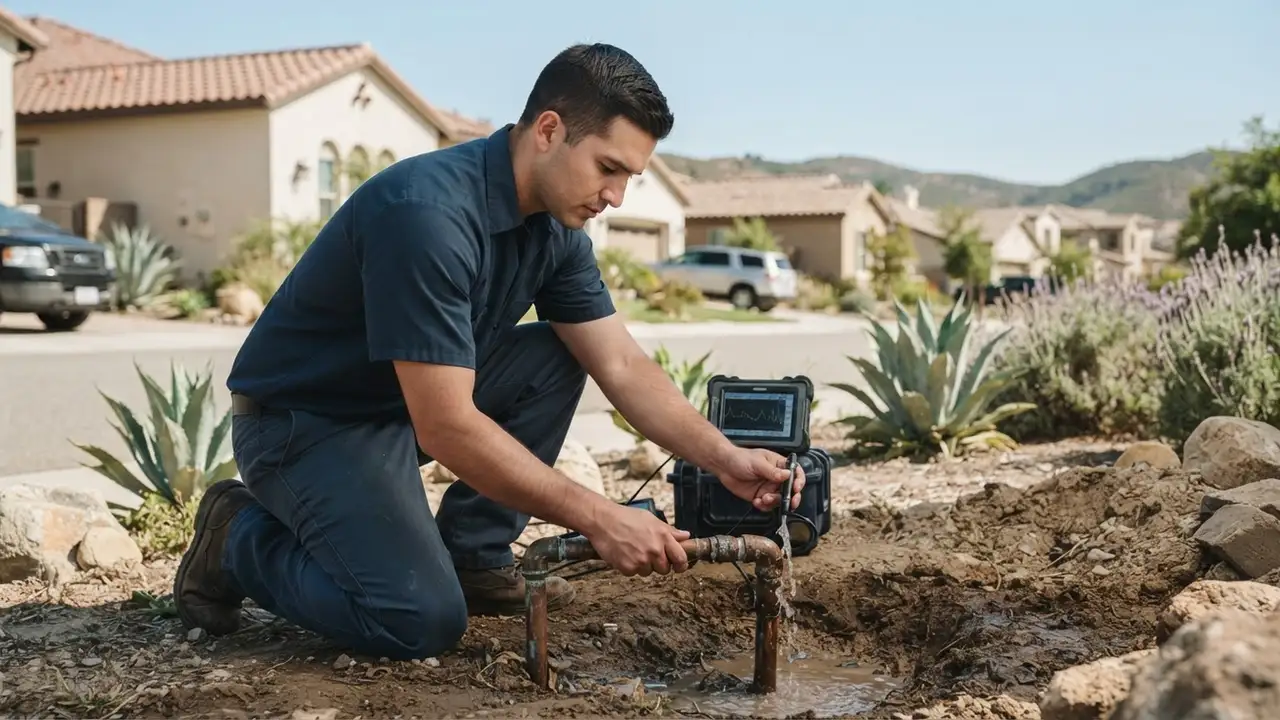
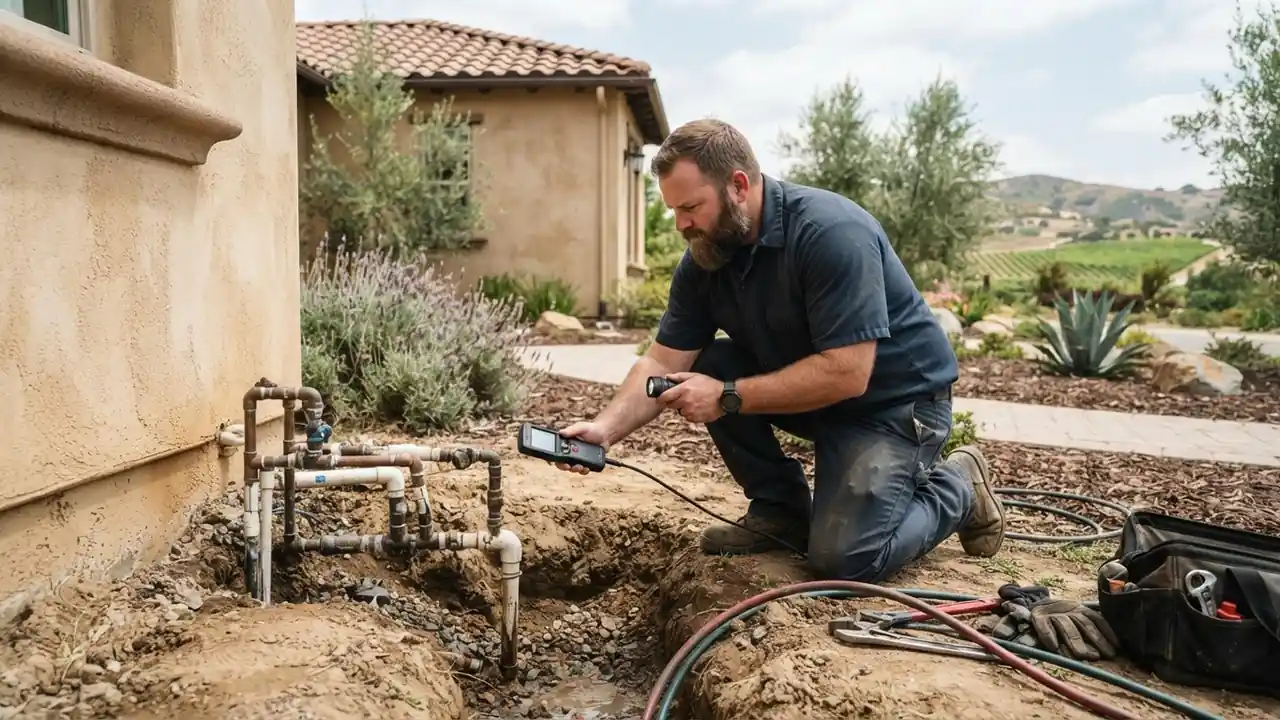
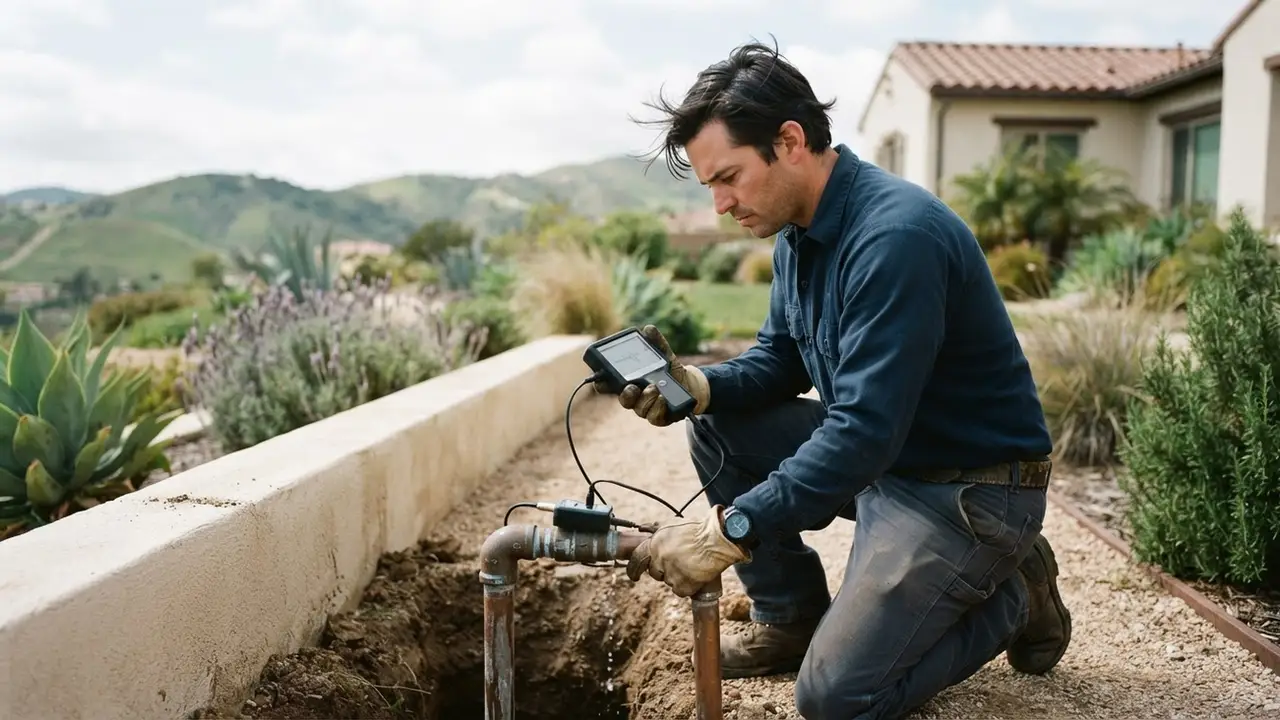
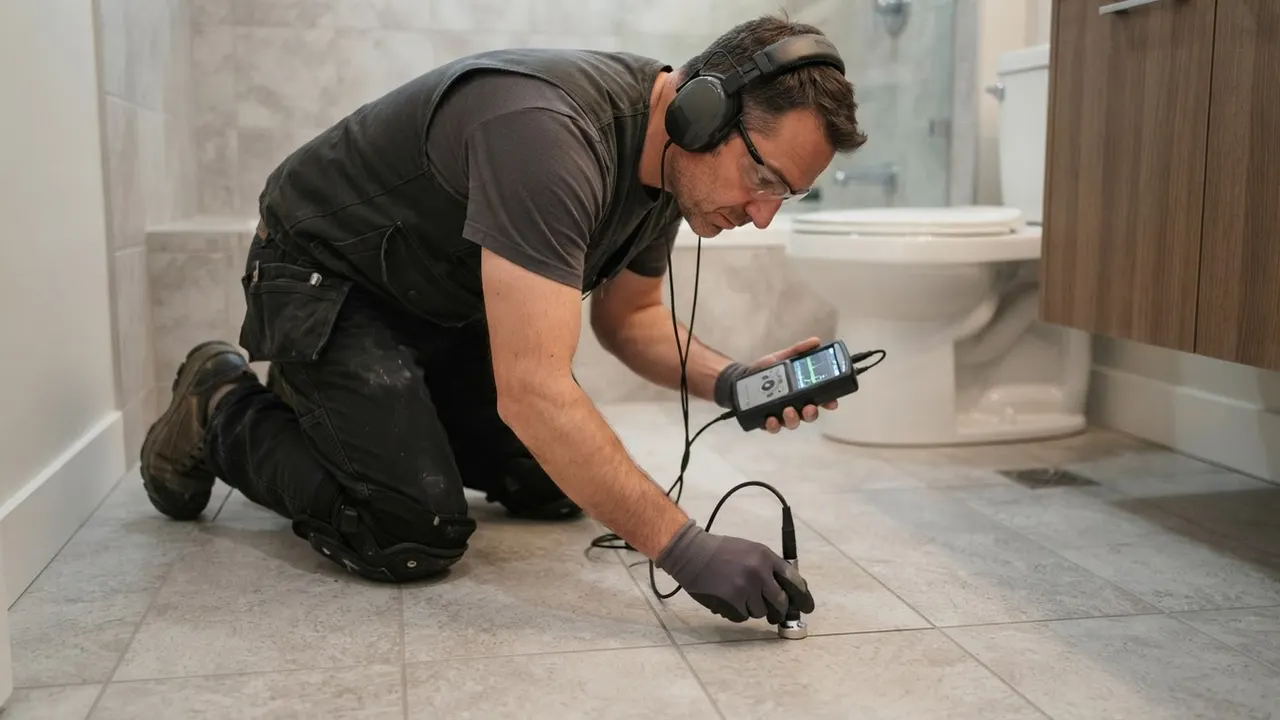
If you are already chasing a leak you cannot find, our team handles Water Leak Detection Temecula CA with acoustic and thermal equipment that pinpoints the source without tearing into walls or slab.
What Maintenance Prevents Water Leaks in Temecula CA?
What prevents water leaks in Temecula CA is a short, repeatable maintenance list done on a schedule - not a one-time inspection. Here is the calendar we recommend to homeowners, and it takes about two hours total across the year.
- Monthly: Read your water meter when no fixtures are running. If the dial moves, you have a leak somewhere on the system.
- Quarterly: Look under every sink for moisture, warped cabinet bottoms, or musty smell. Check the supply lines to the dishwasher and fridge.
- Twice a year: Test water pressure. Inspect the water heater for rust streaks or moisture at the fittings.
- Annually: Flush the water heater. Exercise the main shutoff. Walk the yard looking for spongy grass or unusually green patches.
- Every 5 years: Have a professional run a full leak inspection, especially if the home is over 20 years old.
If your home has copper supply lines under the slab - common in Temecula neighborhoods built before 2000 - that five-year inspection is not optional. Slab leaks start as a faint warm spot on the floor or a water bill that climbs $40 to $80 with no change in habits. Catching one early is a repair. Catching one late is a repipe and a foundation repair.
If you are seeing any of those signs, Slab Leak Detection Temecula CA uses electronic amplification and thermal imaging to confirm a slab leak without breaking concrete to look for it.
Watch Your Water Pressure and Your Water Bill
Your water bill is the cheapest leak detection tool you own. Temecula households typically use 8 to 14 units (CCF) per month depending on lot size and irrigation. If a normal month jumps by 3 or more units with no change in watering or guests, treat it as a leak until proven otherwise.
Two other numbers worth knowing:
- 80 PSI - the pressure ceiling above which pipe joints and appliance supply lines start failing prematurely.
- 120°F to 125°F - a safe water heater setting. Above 130°F, expansion stresses the tank and the T&P valve, and you will start seeing drips at the relief line.
If you have a pressure-reducing valve and your gauge still reads high, the valve has failed. That is a $200 to $400 repair in 2026 pricing and it protects every pipe in the house.
Outdoor and Irrigation Leaks: Temecula's Other Hidden Problem
Roughly a third of the hidden leaks we find in Temecula are outside the house - in irrigation lines, valves, and the main service line between the meter and the foundation. Wine country lots and larger properties in the surrounding neighborhoods run long runs of PVC and poly pipe that crack at fittings and valve boxes.
The signs are easy to miss because the water disappears into soil. Watch for a strip of grass that stays green when everything around it is dry, a valve box that is always full of water, or a low spot in the yard that never dries out. A single broken sprinkler head can waste 15 to 20 gallons a day; a cracked lateral line can waste 10 times that.
For homeowners in the master-planned communities with heavy irrigation systems, we regularly run Irrigation Leak Detection Temecula CA to isolate which zone is losing water before we start digging. In neighborhoods like Harveston Leak Detection, where lots are tight and landscaping is mature, that isolation step saves a lot of unnecessary trenching.
Common Mistakes That Lead to Hidden Leaks
The mistakes that turn a $200 repair into a $4,000 one are almost always about timing, not skill. Here are the ones we see most often.
- Ignoring a small drip because it is "just a drip." A drip at one per second wastes about 8 gallons a day. Over a year that is 3,000 gallons and a rotted cabinet floor.
- Turning the main shutoff off and never exercising it. When the valve seizes, you cannot stop water during an emergency.
- Setting the water heater above 130°F. Higher temperature means higher pressure on the tank and the relief valve.
- Skipping the annual flush. Sediment is the number one killer of tanks in hard-water areas like Temecula.
- Using chemical drain cleaners on a slow drain. They corrode the pipe from the inside and can turn a clog into a pinhole leak.
- Waiting for visible water before calling anyone. By the time water reaches drywall or flooring, the leak has usually been running for weeks.
One more: assuming a new water heater, new fixtures, or a recent remodel means you are safe. New work fails too - usually at the joints - and the first 12 months after any plumbing work is when we get the most callback calls.
When to Call a Professional
Call a professional when the meter moves with everything off, when you hear water running inside a wall, when a floor is warm or damp in one spot, or when your water bill jumps and you cannot find the source. Those four signs mean the leak is hidden, and hidden leaks are exactly what our acoustic, thermal, and pressure-testing equipment is built for.
At Temecula Leak Pros, we find the leak, fix it, and test the line before we leave. We work across Temecula and the surrounding neighborhoods, and we quote the price before we start. If you want a full picture of what we do, our Temecula Leak Detection service covers everything from slab and underground lines to gas and water intrusion.
If you are in one of the older pockets of town, we also handle Leak Detection in Old Town Temecula, where 1920s to 1960s plumbing and modern remodels share the same walls. Older homes there need a different inspection approach than a 2005 build in Redhawk or Vail Ranch.
Frequently Asked Questions
How can I prevent hidden plumbing leaks in my Temecula home?
Keep water pressure under 80 PSI, flush your water heater once a year, exercise the main shutoff annually, and check your meter monthly with all fixtures off. Those four habits catch the majority of hidden leaks before they cause damage. Add a professional inspection every five years if your home is over 20 years old.
What maintenance prevents water leaks in Temecula CA?
Annual water heater flushing, twice-yearly pressure testing, quarterly under-sink inspections, and monthly meter checks. Because Temecula water runs 12 to 18 grains per gallon of hardness, scale control matters more here than in softer-water cities. Replace rubber supply lines with braided stainless every 5 to 8 years.
How often should I inspect for hidden leaks in Temecula?
Do a quick self-check monthly and a full walkthrough quarterly. Bring in a professional leak inspection every 5 years, or every 2 to 3 years if your home was built before 2000 or has copper lines under the slab. Homes with polybutylene or galvanized pipe need annual professional checks.
What is the first sign of a hidden leak?
An unexplained jump in your water bill, usually 3 or more CCF in a month. The second most common sign is a water meter that keeps moving with every fixture off. Warm spots on the floor, musty smells, and bubbling paint follow later - by then the damage is already underway.
Can I fix a hidden leak myself?
You can handle visible drips at a fixture, a leaking toilet flapper, or a supply line under a sink. You cannot safely diagnose a slab leak, an underground line, or a leak inside a wall without detection equipment. Guessing at those usually means cutting into the wrong spot and paying twice.
Get Help with Leak Detection in Temecula
If your meter is moving, your bill is climbing, or you hear water where water should not be, we can find it fast and fix it right. Call Temecula Leak Pros at (725) 715-8182 and we will schedule a leak inspection at your home.